The calendar, not the supermarket aisle, was once the primary guide for what arrived on the table. Across the United Kingdom, that relationship with the growing season has reasserted itself in recent years — not out of nostalgia, but out of a quiet recognition that produce harvested close to its natural window retains more of the nutritional character it was grown with.
Produce at Its Peak
Vitamin content in vegetables and fruits is not fixed from harvest to table. Leafy greens, for instance, can lose a significant proportion of water-soluble nutrients during extended cold storage and long-distance transit. The spinach purchased in January from a distribution warehouse may have spent weeks in controlled atmosphere storage before reaching the shelf. The leek pulled from a local allotment that same week carries a very different story — one measured in days rather than weeks between ground and kitchen.
Published nutritional research consistently observes this difference. Studies comparing freshly harvested brassicas against those stored for four to six weeks have recorded measurable reductions in ascorbic acid and folate. These are not dramatic losses in every case, but across the course of a year's eating, the cumulative pattern becomes relevant to anyone considering everyday nutrition with some care.
The seasonal plate, then, is not a romantic idea so much as a practical orientation. It asks: what is at its best right now, and how do we build a meal around that? The answer changes every six weeks or so, which is precisely what makes it interesting from an editorial standpoint.
Reading the British Year
The United Kingdom's growing calendar offers more variety than is often credited. Winter months bring root vegetables — parsnips, turnips, celeriac — alongside hardy brassicas: kale, Brussels sprouts, January King cabbage. These are not consolation prizes for the absence of summer salads. They are nutritionally dense, fibre-rich crops that form the backbone of the warming, calorie-aware meals that colder months call for.
Spring shifts the register. Purple sprouting broccoli arrives in February and March, followed by asparagus from April onwards. New potatoes appear. Peas and broad beans begin their short, intensely flavoured window. The kitchen response to these arrivals is less about recipe complexity and more about restraint — allowing produce to speak with minimal interference.
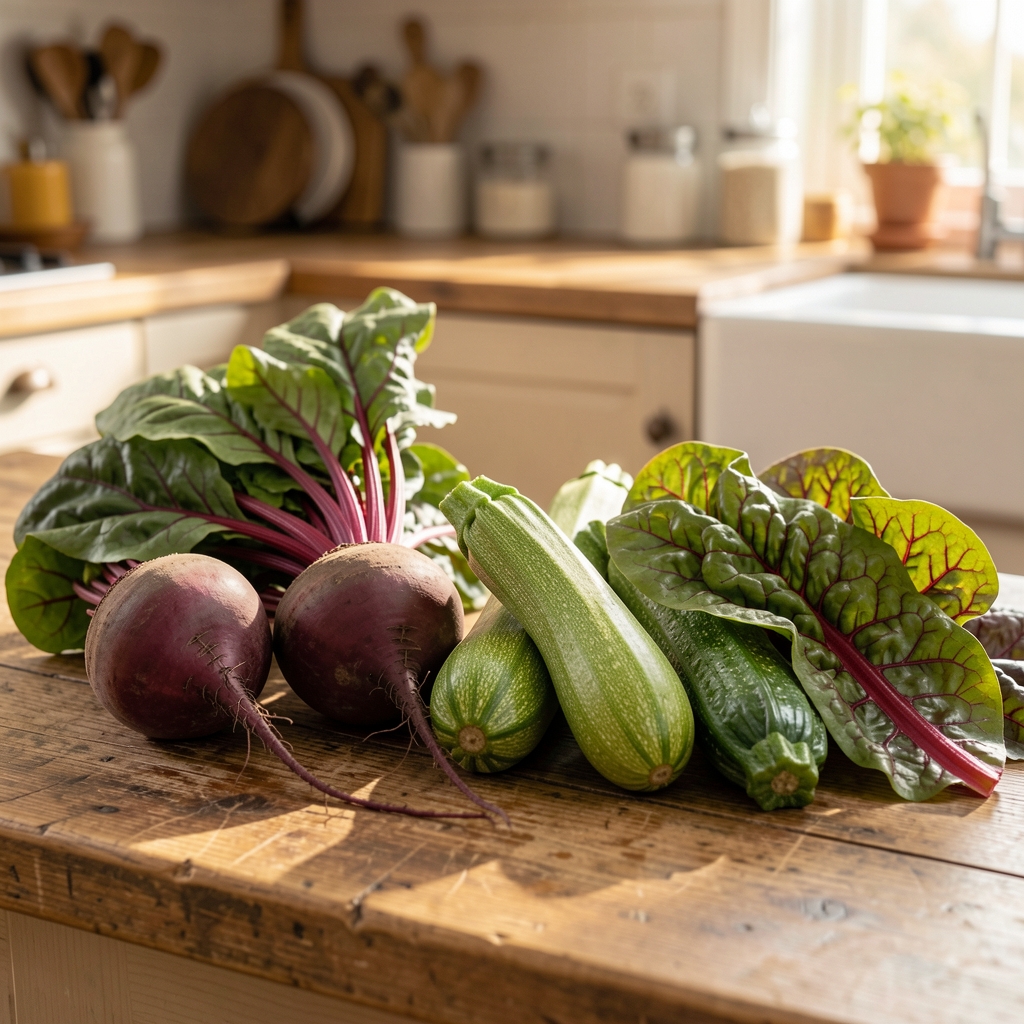
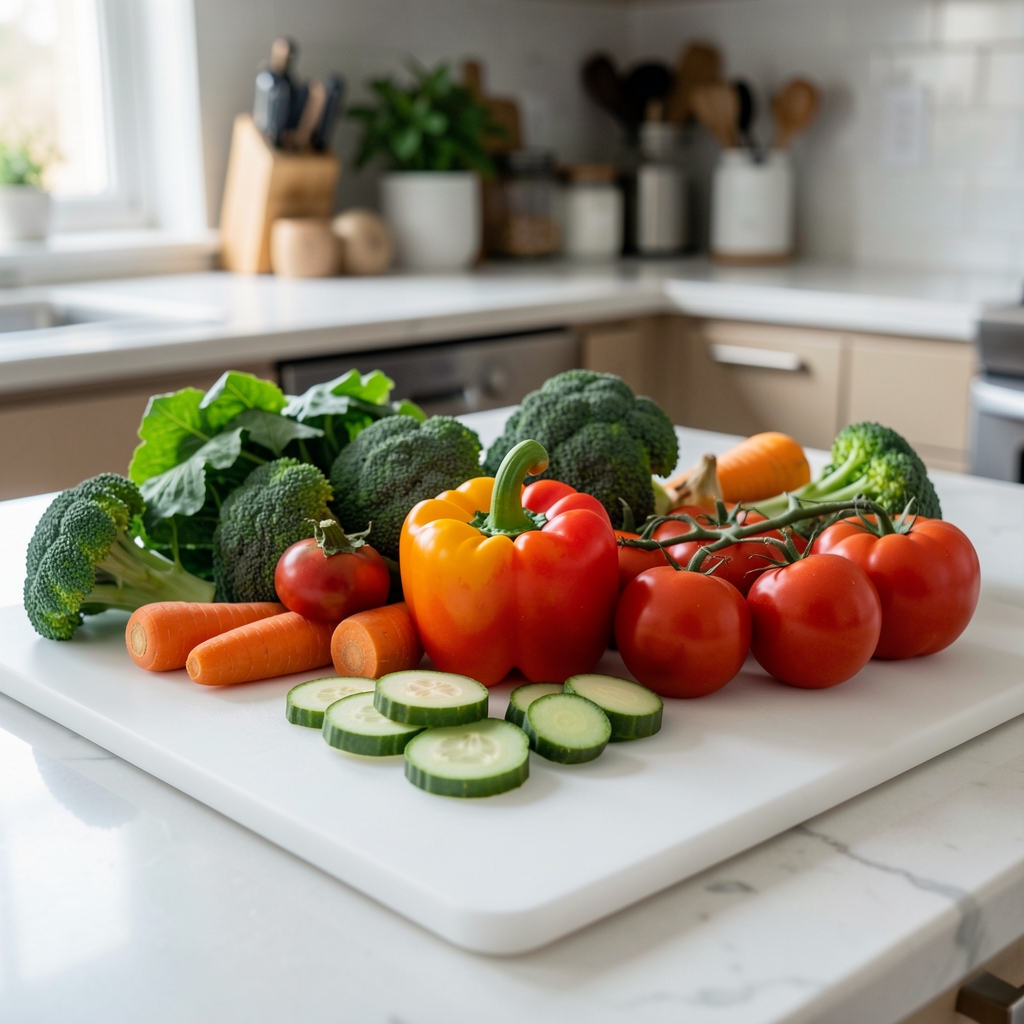
Summer extends the range considerably: courgettes, tomatoes, runner beans, beetroot, sweetcorn, and the full gamut of salad leaves. Autumn consolidates with squashes, apples, pears, and a second wave of root vegetables. Mapping one's weekly meal planning against this progression is an exercise that rewards the effort with better-tasting food and a more coherent approach to whole-food eating.
"The calendar, consulted honestly, turns out to be one of the more reliable nutritional guides available — no subscription required."
Eleanor Whitfield, Dalmor Quarterly
Structuring the Weekly Menu
A workable approach to seasonal meal planning does not require a wholesale reorganisation of domestic habits. The adjustment is largely one of orientation: beginning with what is available rather than what one already intends to cook. This inversion — market before menu — is the structural shift that seasonal eating asks of the home cook.
In practical terms, this might mean a weekly visit to a farmers' market or a subscription to a local veg box scheme, both of which have expanded substantially across the UK in recent years. The veg box, in particular, performs a kind of editorial function: it selects produce at peak availability and delivers a limited but high-quality range, removing the paralysis-inducing breadth of the supermarket's international produce section.
Portion control and calorie awareness follow naturally from this approach. A plate structured around seasonal vegetables — which are typically high in fibre and water content — naturally moderates energy density without requiring precise tracking. A large bowl of roasted root vegetables with a lean protein and some wholegrain requires no spreadsheet; its balance is legible.
The food journal, meanwhile, serves not as a calorie ledger but as a seasonal record — noting which preparations worked, which vegetables were surplus, and what the household's preferences shifted toward as the months progressed. Over time, this produces a personal almanac of sustainable eating that is far more useful than any generic dietary plan.
- 01 Produce harvested within its natural window retains more of its original nutritional character than items subject to extended cold storage.
- 02 The UK growing calendar provides continuous variety throughout the year, contrary to the common assumption of seasonal scarcity.
- 03 Structuring weekly meal planning around available produce — rather than predetermined recipes — is the most straightforward entry point into seasonal eating.
- 04 Fibre-rich seasonal vegetables contribute to portion awareness and a more sustainable weight approach without requiring precise calorie monitoring.
Fibre and the Seasonal Rhythm
The relationship between a fibre-rich diet and gut health is well established in published nutritional literature. What receives less attention is how seasonal eating naturally produces dietary variety across the year — and why that variety matters for gut-friendly eating patterns.
Different plants contain different types of dietary fibre and prebiotic compounds. Leeks and garlic (winter and spring) are high in inulin-type fructans. Artichokes (summer) are among the richest plant sources of prebiotic fibre available to the home cook. Legumes — available preserved year-round and fresh in summer — contribute resistant starch. Varying one's vegetable intake across seasons is, therefore, a practical strategy for maximising the diversity of fermentable substrates reaching the large intestine.
Gut-friendly recipes do not need to be elaborate to be effective. A simple winter soup of leek, celeriac, and white beans — finished with a handful of flat-leaf parsley — delivers a range of fibre types, adequate protein-to-fibre balance, and a calorie profile appropriate for a light weekday evening meal. The seasonal orientation produces this outcome without conscious design.
Hydration habits play a supporting role here. Vegetables with high water content — cucumbers, lettuce, courgettes in summer; celery and fennel in cooler months — contribute to daily hydration alongside conventional fluid intake. The role of food as a hydration source is often overlooked in everyday nutrition discussions, but it represents a meaningful proportion of the daily water intake for those eating a diet rich in whole foods.
The Slow Case for Seasonal Eating
The seasonal plate does not promise rapid transformation. It does not position itself as an intervention. What it offers is a different relationship with the act of eating — one oriented toward the real conditions of food production rather than the artificial abundance of the global supply chain.
For those managing weight with a sustainable approach, the seasonal orientation provides a structural advantage. Foods at their peak are more satisfying — better flavour typically means slower eating and a more accurate reading of satiety. The absence of imported out-of-season produce, often harvested underripe and artificially ripened in transit, removes a category of food that tastes of very little and offers correspondingly little satisfaction.
Nutritionist guidance in recent years has increasingly incorporated the concept of food quality alongside quantity. The seasonal plate, understood in this light, is not an alternative to balanced meals — it is a method for achieving them, one that respects both the nutritional character of whole foods and the practical constraints of home cooking.